


The Purr-fect Weight: A Comprehensive Guide to Feline Health and Diet
For every cat parent, ensuring our feline friends live a long, happy, and healthy life is a top priority. One of the most critical, yet often overlooked, aspects of a cat's well-being is maintaining an ideal body weight. Unlike dogs, a cat's weight issues can be subtle, but the health consequences of being underweight or overweight are significant. This guide, brought to you by Twintails.pet, will help you assess your cat's body condition and provide actionable steps for optimal feline nutrition and weight management.
Understanding Your Cat's Body Condition Score (BCS)
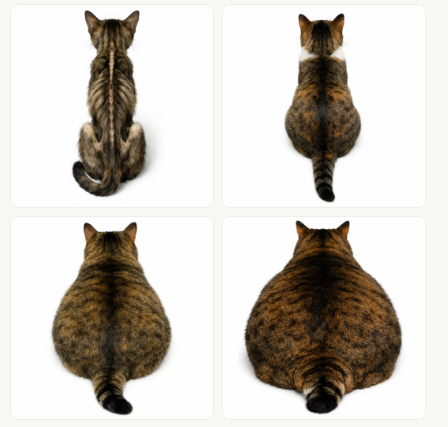
The Body Condition Score (BCS) is a standardized, non-invasive method used by veterinarians to assess a cat's fat reserves. It is typically measured on a 9-point scale, where a score of 5/9 is considered ideal. By looking at your cat from the side and, crucially, from above (the back view), you can get a clear picture of their physical state.
Below, we illustrate the four main categories of the BCS, focusing on the view from above, which helps you assess the waistline and fat deposits along the back.
BCS Category | Score Range | Key Visual Indicators (Back View) | Image |
Underweight | 1-3/9 | Ribs, spine, and pelvic bones are easily visible and prominent. An extreme hourglass shape is present, and the cat appears frail. | |
Ideal/Normal | 4-5/9 | The body is well-proportioned. A visible waist is present behind the ribs. The back is smooth, and the ribs are easily felt with minimal fat covering. | |
Overweight | 6-7/9 | The waist is barely visible or absent. The back appears broad and flat. Ribs are difficult to feel due to a moderate layer of fat. | |
Obese | 8-9/9 | No waist is discernible. The body is very round and wide, with a noticeable bulge over the hips and lower back. Ribs are not palpable under a very thick fat layer. |
The Hidden Dangers of Feline Obesity
Feline obesity is a serious health crisis that significantly reduces a cat's quality of life and lifespan. A cat that is even slightly overweight is at risk for a host of debilitating conditions:
•Diabetes Mellitus: Excess body fat leads to insulin resistance, making cats highly susceptible to Type 2 diabetes.
•Joint Disease and Osteoarthritis: The extra weight puts immense strain on joints, leading to pain, reduced mobility, and arthritis.
•Hepatic Lipidosis (Fatty Liver Disease): This is a life-threatening condition that can occur if an overweight cat stops eating or loses weight too rapidly.
•Urinary Tract Issues: Overweight cats may have difficulty grooming, which can lead to urinary tract infections and other complications.
•Reduced Lifespan: Studies consistently show that maintaining an ideal weight can add years to a cat's life.
A Healthy Diet for Your Obligate Carnivore
Cats are obligate carnivores, meaning their diet must consist primarily of animal protein. Their metabolism is specifically adapted to process protein and fat, not carbohydrates.
1.Prioritize Protein: A high-protein, moderate-fat, and low-carbohydrate diet is essential for a cat's health and is particularly effective for weight loss. Protein helps preserve lean muscle mass while the cat is in a calorie deficit.
2.Embrace Hydration (Wet Food): Wet food is often recommended for weight management because it has a higher water content, which increases satiety and helps with urinary tract health. Dry kibble is often higher in carbohydrates and calorie density.
3.Strict Portion Control: Free-feeding is a major contributor to obesity. Use a measuring cup or, ideally, a digital scale to measure your cat's daily food allowance precisely. Consult your veterinarian to determine the exact number of calories your cat needs to maintain or safely lose weight.
Weight Management and Interactive Play
Weight loss must be a slow and steady process. A safe target for weight loss is 1–2% of total body weight per week. Losing weight too quickly can trigger the dangerous condition of hepatic lipidosis.
•Limit Treats: Treats should make up no more than 10% of your cat's total daily caloric intake. Consider healthy, low-calorie alternatives like small pieces of cooked lean meat or fish.
•Make Them Work for It: Use puzzle feeders or food-dispensing toys to slow down eating and provide mental stimulation. This mimics the natural hunting process.
•Interactive Exercise: Encourage movement through interactive play. Use feather wands, laser pointers (ending with a physical reward), or toys that mimic prey. Aim for several short play sessions (5-10 minutes) throughout the day to keep their metabolism active and strengthen your bond.
By regularly checking your cat's Body Condition Score and making informed choices about their diet and activity, you are taking the most important steps toward ensuring they remain a healthy, happy member of your family for years to come. Always consult with your veterinarian before starting any new diet or weight loss program.



Comments